
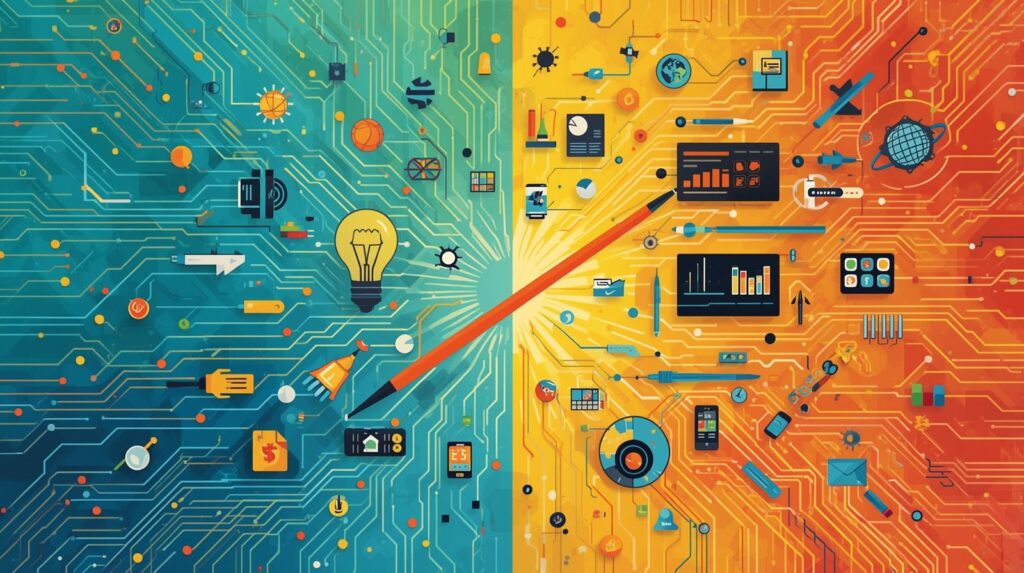
Introduction: The Dual Forces Shaping Education
Modern education is evolving at a rapid pace. With the rise of artificial intelligence, digital learning tools, and smart classrooms, technology has become an inseparable part of the learning environment. However, while technology provides efficiency, accessibility, and speed, it cannot replace the unique abilities of human imagination, emotional intelligence, and creativity. For students to thrive in the 21st century, education must strike a balance between embracing technological innovation and nurturing human creativity.
The Power of Technology in Education
Technology has reshaped how students learn and teachers teach. Digital platforms offer instant access to knowledge, online courses bring education to remote areas, and AI-powered tools provide personalized learning experiences. Key benefits include:
- Accessibility: Students can learn anytime and anywhere with online resources.
- Efficiency: Digital tools reduce time spent on repetitive tasks and improve productivity.
- Personalization: Adaptive learning systems tailor content to individual learning styles.
Despite these advantages, technology alone cannot ensure holistic development.
The Irreplaceable Value of Human Creativity
Creativity is at the heart of problem-solving, innovation, and emotional expression. Unlike machines, humans can think abstractly, connect diverse ideas, and approach problems with empathy. Some key roles of creativity in education are:
- Fostering Innovation: Encouraging students to think outside the box and generate original ideas.
- Building Emotional Intelligence: Helping students understand human emotions, culture, and ethics.
- Developing Adaptability: Preparing learners to face unexpected challenges in the real world.
Without creativity, education risks producing learners who can only replicate existing knowledge instead of creating new solutions.
Finding the Balance Between Creativity and Technology
The real challenge lies in integrating technology in a way that enhances, rather than replaces, human creativity. Some strategies include:
- Blended Learning Models: Combining digital tools with project-based, creative learning tasks.
- Collaborative Projects: Using technology to connect students globally while encouraging group innovation.
- Creative Use of Technology: Teaching students not only to consume information but also to design apps, create digital art, or build new solutions.
This balance ensures students use technology as a tool while strengthening their imagination and originality.
Preparing Students for the Future
The future workforce will demand both technical proficiency and human creativity. Automation and AI may replace repetitive jobs, but industries will still need individuals who can innovate, adapt, and lead with empathy. Education must therefore:
- Teach coding and digital skills alongside arts, music, and design.
- Encourage critical thinking instead of rote memorization.
- Promote lifelong learning so students remain relevant in a changing world.
Conclusion: A Harmonious Path Forward
Modern education cannot ignore technology, nor can it afford to neglect creativity. The two must complement each other to prepare students for the challenges and opportunities of the future. By striking this balance, schools and universities can cultivate well-rounded individuals—technologically skilled, yet deeply human, imaginative, and innovative.
